Middle East Energy 2026: A Quieter Show, But Clear Signs of a Changing Market
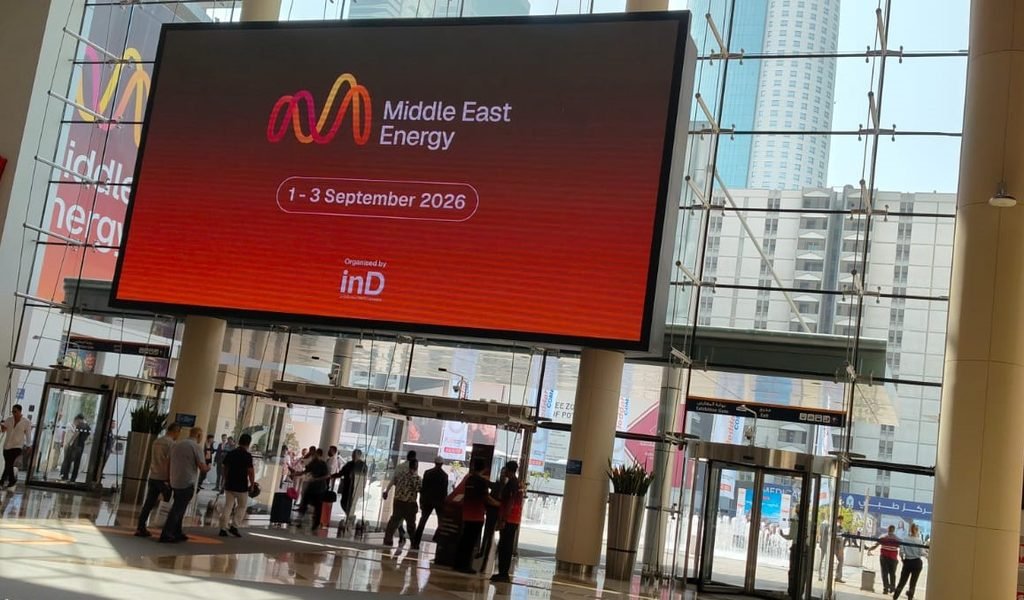
Dubai, UAE | September 2026
Middle East Energy 2026 was an interesting edition for us. Compared with previous years, the show felt noticeably smaller and less crowded — likely a reflection of the current situation in the Middle East and the travel challenges that came with it.
But despite the lower footfall, the conversations we had gave us some of the clearest signals yet on where this market is heading.
A Strong Shift Towards Lithium-Ion Storage
The most noticeable trend on the floor this year was the sheer number of battery and energy-storage companies present.
The broader market is clearly moving away from traditional lead-acid batteries and toward lithium-ion technology, and this shift isn’t confined to premium or niche applications anymore — it’s becoming mainstream for solar storage, backup power, commercial use, and off-grid systems alike.
What stood out most to us personally: several Indian companies that have traditionally built their business solely around lead-acid batteries are now actively diversifying into lithium-ion. That’s a meaningful signal — when established lead-acid players start hedging into lithium, it tells you the shift isn’t speculative anymore, it’s already reshaping how manufacturers plan their product lines.
The Middle East Keeps Building
The Middle East itself continues to see serious investment in renewable energy and supporting infrastructure. Large-scale solar projects are increasingly being paired with storage, and governments and utilities are investing in stronger transmission and distribution networks to match.
The market here is maturing. Buyers aren’t just shopping for solar modules or batteries in isolation anymore — they’re looking for complete, bankable, reliable energy solutions. That shift opens real opportunity not just for manufacturers, but for EPC companies, system integrators, battery suppliers, and inverter makers alike.
Off-Grid: The Next Big Growth Area
If there’s one personal takeaway we’d highlight above the rest, it’s this: off-grid and hybrid systems look increasingly like the next major growth segment in renewable energy.
As solar and battery technology keeps improving, delivering reliable power without full dependence on the conventional grid is becoming genuinely practical — not just a niche workaround. A typical setup now looks like:
Solar PV + Lithium Battery + Inverter + Energy Management System, with a diesel generator held back purely as backup.
This model is especially valuable across remote parts of Africa and the Middle East, and for sectors like mining, agriculture, telecom, hospitality, and remote commercial sites where grid access has always been the limiting factor.
About the Smaller Crowd
The lower footfall this year doesn’t read to us as a sign of weaker market demand. Geopolitical conditions and international travel disruptions clearly played a role in who could attend.
If anything, the conversations we did have felt more substantive — focused on real projects, real technology choices, real pricing, and real deployment plans, rather than casual browsing. A quieter floor with sharper conversations is, in its own way, a good sign.
Our Key Takeaway
Middle East Energy 2026 reinforced something we’ve been sensing for a while: the renewable energy market is entering its next phase, and it’s no longer just about generating solar power.
It’s increasingly about generating, storing, managing, and delivering reliable energy — wherever it’s needed, grid or no grid.
The combination of solar, lithium-ion storage, and off-grid systems has enormous room to run across both Africa and the Middle East. The floor may have felt quieter this year, but the direction of the industry has never been clearer.